
7 Signs Childhood Trauma May Still Be Affecting You As An Adult
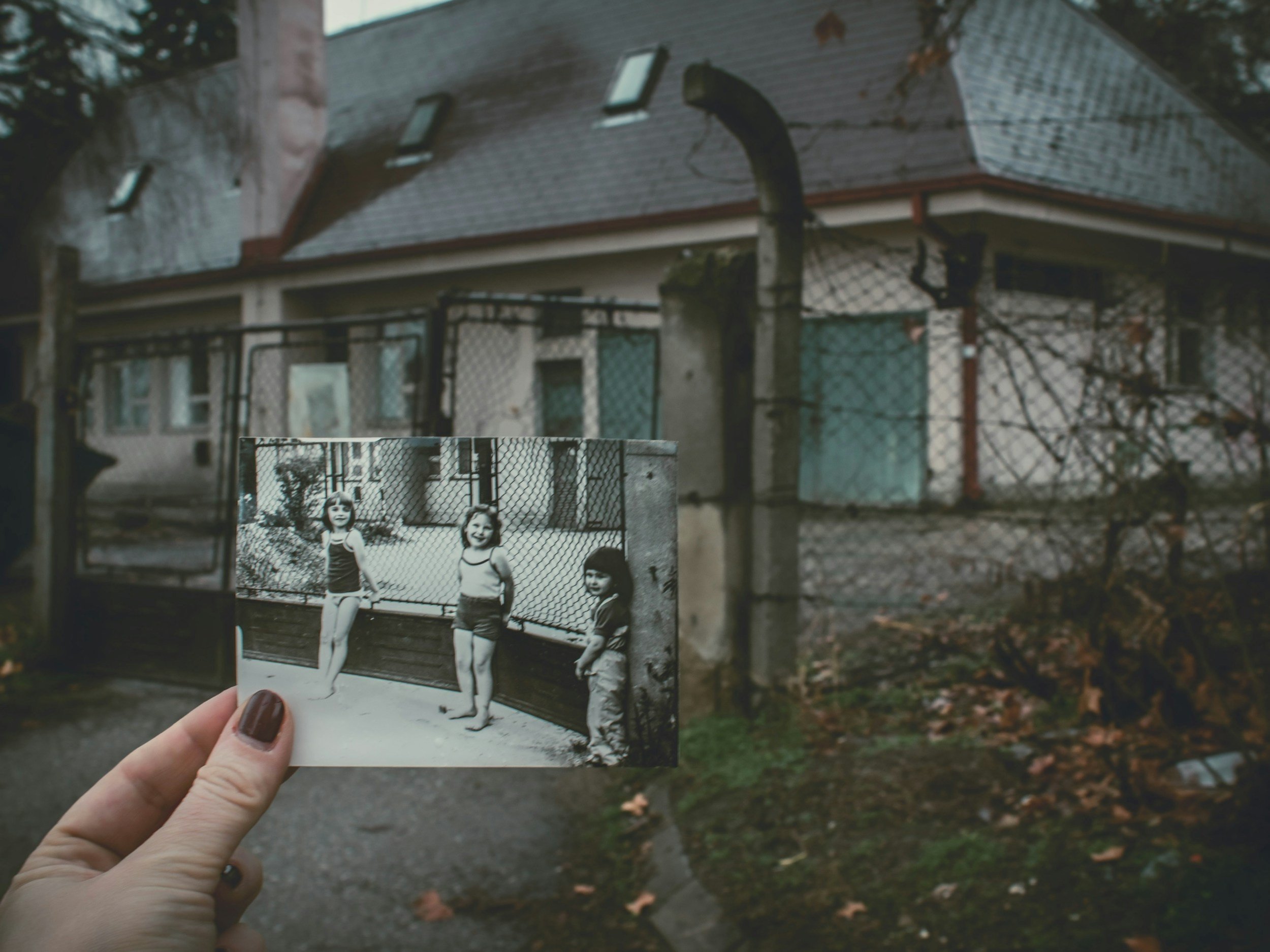
A hand holds an old black-and-white photograph of children playing in front of a house. Behind it, the same house appears in the present day. The image conveys the idea that while time moves forward, the impact of childhood experiences can remain with us.
Many adults believe that trauma refers to severe events, such as combat, assault, or natural disasters. However, trauma can also result from chronic stress, emotional neglect, inconsistent caregiving, or growing up in an environment where you don’t feel safe, seen, or supported.
For this reason, “childhood trauma” sounds strong to some. Maybe you weren’t overtly physically or sexually abused. Maybe you had food on the table and a roof over your head. You don’t feel like your childhood was that bad.
And yet, you find yourself wondering, “why am I like this?”
Childhood trauma doesn’t necessarily mean a PTSD diagnosis. You can experience traumatic things that affect how you show up today. Here are 7 signs that what you experienced as a child is affecting you as an adult.
You Have A Hard Time Trusting People.
Maybe one day your caregiver showed up for you, but the next day they were unavailable, dismissive, or unpredictable. You learned that support wasn't something you could count on. As an adult, that can make it difficult to trust others, even when they have good intentions.
You Find Yourself Oversharing Or Revealing Too Much Too Soon.
You crave connection and understanding. Sometimes, that can lead you to share deeply personal details before trust has had a chance to develop. You may hope that if you open up, the other person will understand you, accept you, or feel closer to you.
You Carry Tension In Your Body, Even When You’re Trying To Relax
Your shoulders are always raised, your jaw clenched. You didn’t even notice you were doing it until you just read this. Maybe you just relaxed your muscles, but by the time you get to the end of this blog, they’ll be tense again. When your nervous system spends years preparing for danger, it can become difficult for your body to recognize when it's actually safe to relax.
You Are Always On Edge Or Expect The Worst To Happen
Your phone vibrates. Your first thought is someone was in an accident. Your boss emails you, and you start to panic that you’re fired. You always expect things to go south. This is an example of hypervigilance, when people are on high-alert constantly, waiting for something bad to happen and the need to feel ready to react when it does.
Your Mind Won’t Shut Off When It’s Time To Sleep
You’re so exhausted, but when you finally go to bed, sleep won’t come. Instead, your brain replays conversations from the past or creates endless "what if" scenarios about the future. You can’t get your brain to stop spiraling.
You Put Others’ Needs Before Your Own
Maybe you describe yourself as a people-pleaser. If you just put yourself aside, others will like you. Maybe you believe that if you keep everyone else happy, you'll finally feel accepted, valued, or secure.
You Shut Down, Withdraw, Or Go Silent During Conflict
You don’t feel like you can safely present your side. Your perspective doesn’t matter to anyone anyway, and conflict feels unsafe. Instead, you shut down. You withdraw. You don’t bother to respond. This feels like the safest way to avoid a huge fight. This response is sometimes called "freeze" or "fawn" and is a common trauma response.
If you recognized yourself in several of these signs, it doesn't necessarily mean you have PTSD or that your childhood was "worse" than someone else's. It may mean that experiences from your past are still influencing how you think, feel, relate to others, and respond to stress today.
The good news is that these patterns can change. Trauma-informed therapy can help you understand why these responses developed, process painful experiences, and learn new ways of relating to yourself and others.
You don't have to spend the rest of your life in survival mode. Healing is possible.
At Bright Skies Therapy, I provide trauma-informed therapy and EMDR for adults across Georgia. If you're ready to explore how your past may be affecting your present, I'd be honored to help.